Some wine projects start with a grape. Others with a dream. Tenute Sinis started with an architect who saw what others didn’t.
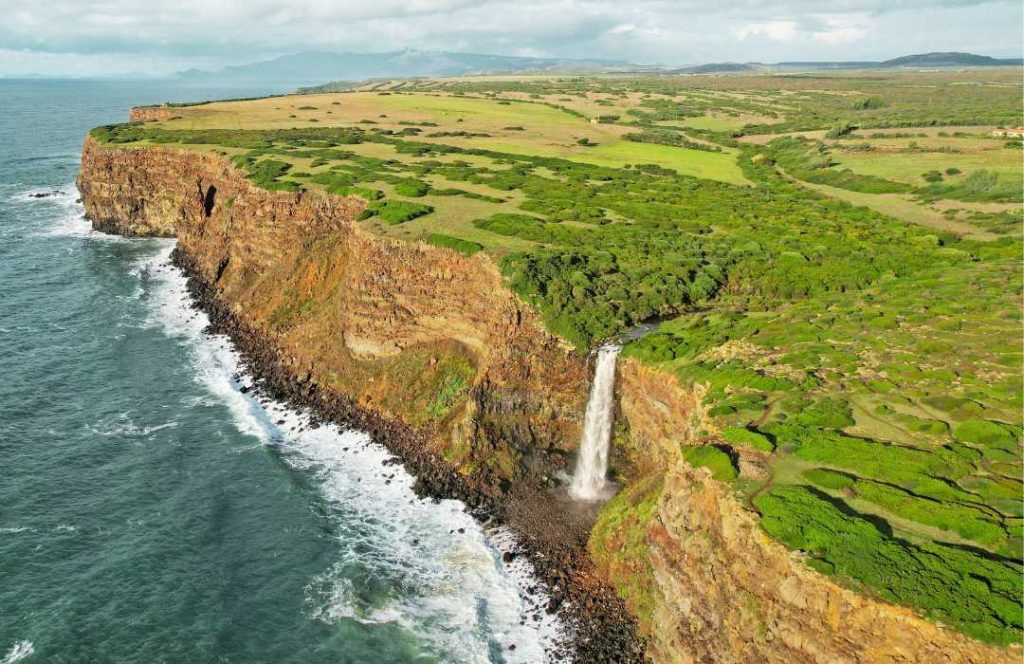
Antonello Loi, born in Sardinia and shaped by architecture, saw not only the current landscape but also the potential it held. And the history. During his career in Italy and abroad, Antonello learned to recognize the silent potential of landscapes: the lines, how the light falls, the forgotten structures waiting to regain meaning. With every return to Sardinia, he noticed the same thing: small, historic vineyards were slowly disappearing from the landscape. Not because they had lost their quality, but because no one saw their future anymore. Where others saw decay, Antonello saw identity. And that is exactly where Tenute Sinis began.
The birth of a vision
Long before Tenute Sinis had a name, a logo, or a bottle, Antonello began restoring coherence to the landscape of the enchanting Sinis coast on the stunning west coast of Sardinia. He bought small, often fragmented plots and connected them into one natural whole.
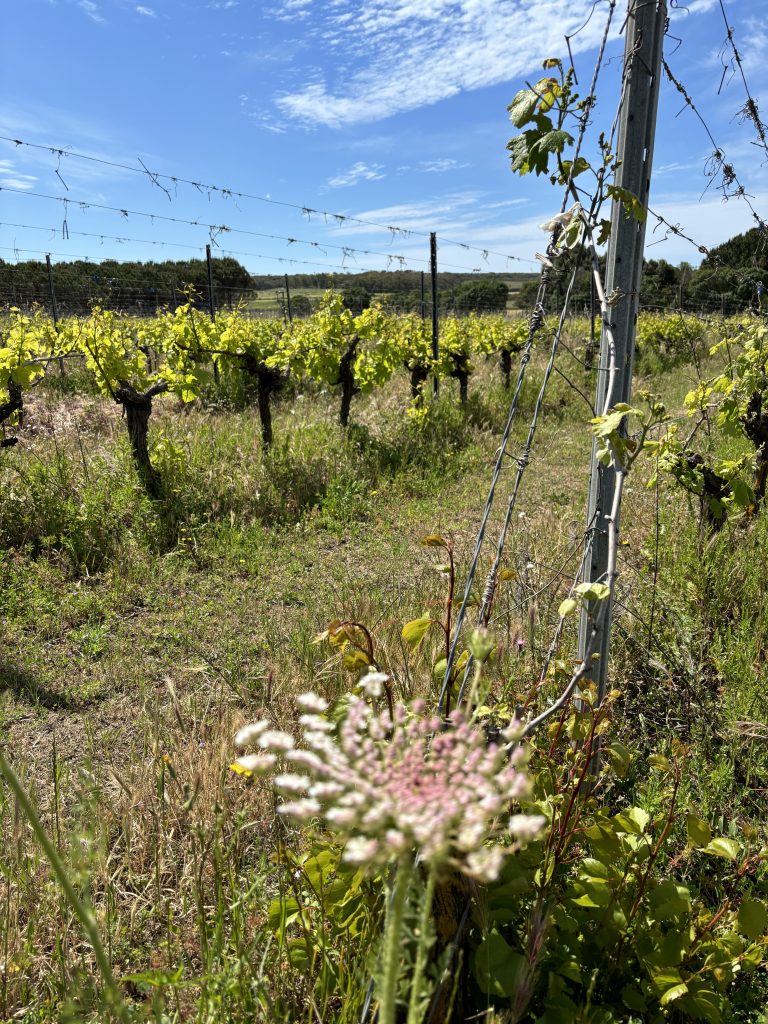
Remarkably, he did not start with vines, but with lavender and other Mediterranean herbs and plants that were once commonplace in this part of Sardinia. The original flora was given space, biodiversity returned, and the landscape regained its natural rhythm. Only then did the wine arrive: An old vineyard, just a few hundred meters from Is Arutas, the famous quartz beach, became the first visible chapter of Tenute Sinis. Not because it was the largest or easiest vineyard, but because it possessed an indivisible soul. “The vineyard was not chosen because it was the largest… but because it possessed something that can never be created from scratch: identity.”
This fascinating story prompted me, during my visit to a wine event in Pollenzo, to ask two representatives of Tenute Sinis for more information in order to write this article.
A landscape that shapes the wine
The Sinis coast is one of the most characterful wine regions of the Mediterranean. Here, the Maestrale—the cool, salty wind—determines the health of the vines. Light is abundant, the vegetation smells of the sea and herbs, and the limestone soil gives the wines their specific freshness and mineral elegance. On the peninsula, one cannot escape the influence of the wind and the sea.
For Tenute Sinis, therefore, the terroir is not just soil, but an interplay of sea, wind, light, vegetation, history, and the people who care for the landscape. The result is wine that not only has a taste but truly breathes its roots. They call it ‘the magic of transformation: from fruit to emotion in the bottle’. In addition to their love for the land, Tenute Sinis aims to promote ethical, respectful, and authentic agriculture. Decisions are therefore always made with an eye to the identity of the landscape and the values of traditional viticulture. And always for the long term (> 20 years).
Every bottle a geographical document: Esposto
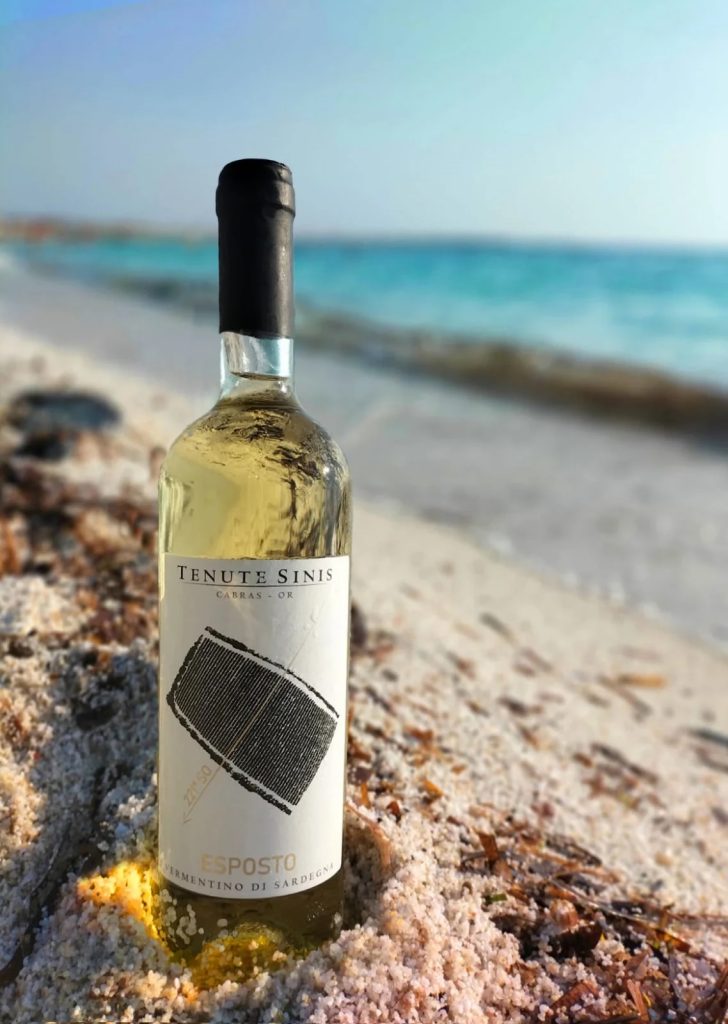
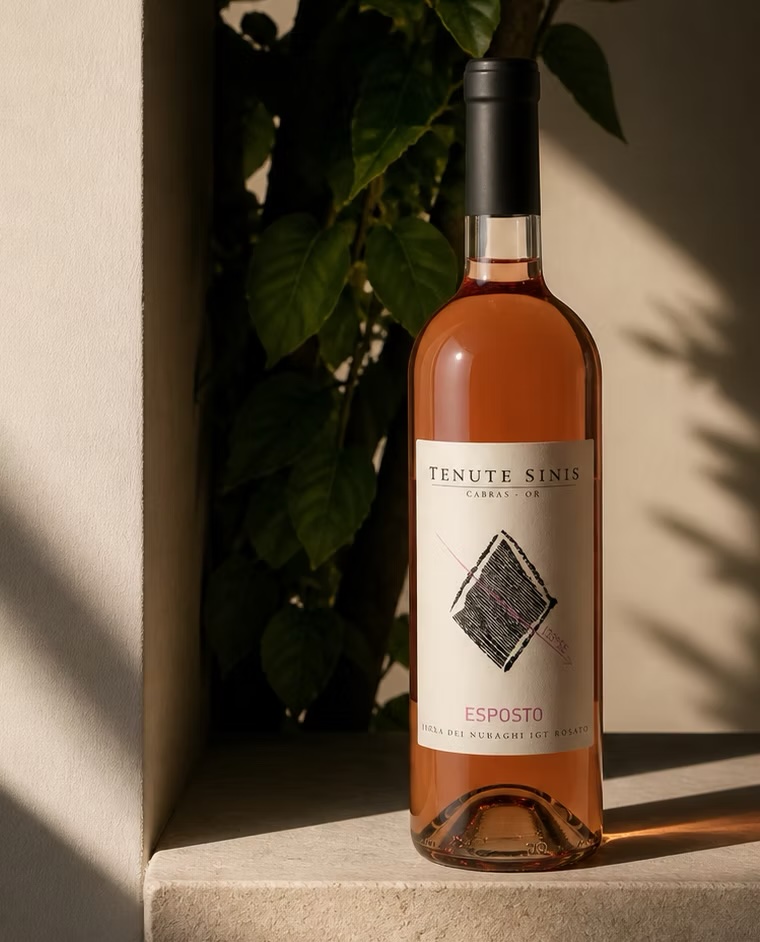
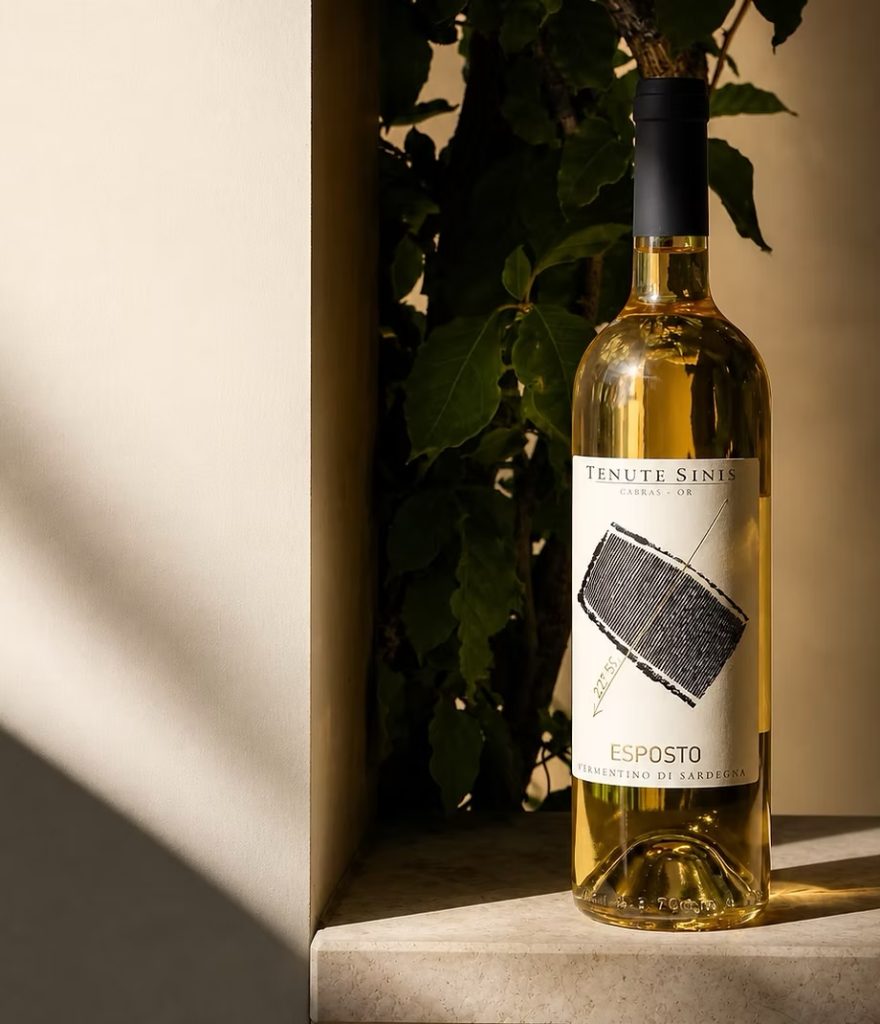
As the vineyards continued to develop, one insight became increasingly clear: every vineyard has its own personality. Instead of blending those differences away, Tenute Sinis decided to preserve them. This is how Esposto came into being: wines that each bear the exact orientation of their vineyard: such as 221° South West and 133° South East. The bottle labels show the precise contours of the plots. No illustration, no interpretation – only the pure lines of the landscape itself. “Every line corresponds to the true boundaries of the vineyard.”
The grapes of Tenute Sinis
The landscape had already chosen the grapes before Tenute Sinis existed. Tenute Sinis embraces what was already there:
- Vermentino: the natural translation of the maritime Sinis coast yields a beautiful white wine that, through concentration and bouquet, can rival the best Vermentinos
- Nieddera: one of Sardinia’s rarest indigenous varieties, used here for a rosé wine. The name comes from the Sardinian word nieddu, which means black. This red grape is known for its fruitiness and freshness.
- Carignano: indeed, like the French Carignan. The grape has a long history here and produces fruitier, smoother wine with fewer tannins than is the case in other countries.
Tenute Sinis, Sardinia as it was meant to be
Whoever drinks the wines of Tenute Sinis tastes not only the beauty of Sardinia. You also taste a landscape that was almost lost. You taste an architect who brought it back. You taste a future built on respect, patience, and authenticity. And that can only result in distinctive, high-quality wines. I already tasted the high-quality Vermentino in Italy, and the rest will surely follow soon.
Want to read more about Tenute Sinis? Visit the website of this exceptional wine producer.